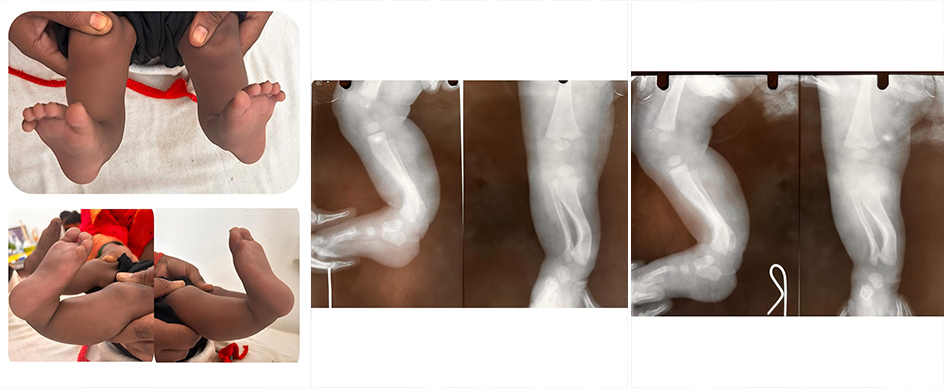
Congenital Posteromedial Bowing of Tibia and Fibula: Symptoms & Treatment
🦴 Awareness Post: Congenital Posteromedial Bowing of Tibia and Fibula 🦴
What is it?
Congenital posteromedial bowing of the tibia and fibula is a rare birth condition where a baby
is born with an inward and backward curvature of the lower leg bones. It may look unusual but is
usually not painful and often improves with time.
Key Facts:
🔹 Typically noticed at birth
🔹 More common in one leg (unilateral)
🔹 Often associated with limb length discrepancy as the child grows
🔹 Not caused by any action during pregnancy
🔹 It is not preventable, but it is manageable
Symptoms to Watch For:
✔️ Curved leg (visible bowing)
✔️ Limp or walking difficulty as the child grows
✔️ One leg appearing shorter
What Can Be Done?
🩺 Most mild cases improve naturally over time with observation
🦿 Bracing or physiotherapy might be recommended in moderate cases
🛠️ In more severe cases or when leg length difference becomes significant, surgical correction
may be needed during growth years
Early Diagnosis = Better Outcomes
👶 Pediatric orthopedic assessment is key
📏 Regular follow-up is essential to monitor bone growth and alignment.
Let’s spread awareness!
Early recognition helps in guiding parents, easing anxiety, and planning timely intervention. If
your child shows signs of bowed legs at birth or limps during early walking years, consult a
pediatric orthopedic specialist.
Restoring mobility, restoring life.🤞🏽✌️🤞🏽✌️
#orthopedicsurgeon #orthopedicsurgery #congenitaldeformitiesofthefoot #tibia #fibula #pediatricorthopaedics